0

How have new digital technologies changed the way journalists do their core job and communicate with their readers/listeners/viewers?

The digital technologies have changed people’s daily life. Jericho (2012) pointed out the media had been trying to adapt to the online world since 1980s. People gradually like to query the information on the Internet. At the same time, social media have made journalists closely connected with their readers; they have to find a new way to reach their audiences who are active on the Internet. This is a significant change in the way journalists do their core job and communicate with their readers. In the past, journalists and readers were almost separated parts. Readers had rare communication with journalists; they just read newspapers or watched videos, leaving praises or criticism alone. On the other hand, journalists also hardly got feedback from their audiences. Mandiberg (2012) stated that journalists always gave themselves a handicap when they did not use digital technologies.

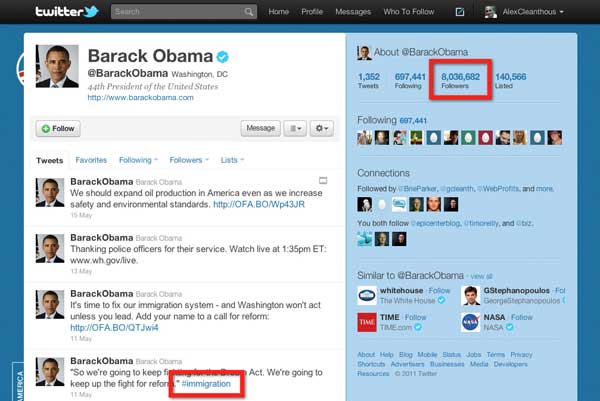
In the past, journalists and viewers could not affect each other in most situations. However, the digital technologies have changed these models. The E-mail makes communication more convenient; viewers can give advices or opinions through it. Then, social media stimulate further development, which makes communication to a higher level. Digital technologies not only make news delivered faster than ever, and even provide connections between general public and politicians. The expanding blogosphere makes people easily participate in politics. People can communicate with many politicians online.

Image

(http://www.webprofits.com.au/blog/wp-content/uploads/06_twitter.jpg)

There have been co-adaptation and competition between media and politicians recently. Politicians have to find a new way to reach the audiences the same as the journalists. Then, politicians begin to use digital technologies to spread their ideas and to control some news. For example, Obama used digital campaign and got significant success. According toRospars, Muller and Brissenden, the traditional way of campaign had weak coverage; they used thousands of online videos to affect a new generation of voters in such bad situation. Pew Research Center’s Journalism Project Staff reported “some younger voters were attracted to Obama because of his digital activity or whether Obama used digital platforms because it was a logical way to reach a natural voter base.”  The digital technologies have influenced the way of thinking for people, and politicians have to adapt the new change.

All in all, Wilson said that the behavior of journalists and politicians decide the influence of audience, because the digital technologies make almost everything come into open.  The audience is easier to get information they want; the journalists and politicians have to keep in touch with their viewers.

Reference lists:

Jericho, G. (2012). Journalists all a Twitter. In The Rise of the Fifth Estate: social media and blogging in Australian politics (pp. 222-267). Retrieved from http://webpac.canberra.edu.au/record=b1688007~S4

Pew research center’s journalism project staff 2012. How the Presidential Candidates Use the Web and Social Media, Pew Research Center, viewed 10 November 2013, http://www.journalism.org/2012/08/15/how-presidential-candidates-use-web-and-social-media/

Rospars, J., Muller, S., Brissenden, M 2013. Obama: The Digital Campaign, ABC, viewed 10 November 2013,http://www.abc.net.au/tv/bigideas/stories/2013/07/01/3789946.htm

Wilson, J. (2013). Kevin Rudd, celebrity and audience democracy in Australia. Journalism, 1-16. doi: 10.1177/1464884913488724

0

How are digital technologies affecting users’ privacy in negative ways?

In the 21st century, the social media and other digital technologies are widely used in our daily life. It brings many benefits. However, the increasing publicity means less privacy.   Jurgensen & Rey (2012) stated that 48% of American adults used social network sites. For example, Facebook is a significant social utility; Facebook founder Mark Zuckerberg predicts that social media will not just get more users, but also get more shared information on the Internet.

Image


(http://blog.bitskin.de/wp-content/uploads/2013/05/Facebook_popularity.png)

Thus, to protect privacy in networked age is important. Understanding of privacy and controlling your data is a key to protect your privacy.

The information such as government benefits, health professionals is always shared on the internet. However, the personal information is being collected as well. In most situations, when I create an account on a website, it will require my real name, address, date of birth, gender and so on. For example, the Facebook registration needs my e-mail, name, gender and other information, which means Facebook obtains my information with no expense. Moreover, I have unintentionally provided much personal information on the internet. To be exact, the pictures, linking posts and location data, reveal my personal information too. Computer-based information including browser, operating system, and IP address also reveal my secrets. People can identify my location through these ways. Furthermore, the advertisers like to set some cookies, which allows them to track user movements among sites; they form advertising networks to track users and build user profiles to make money.

People have no idea by whom the leaked information will be handled. Google gets to know people’s gender, age, name and even location.

The company builds user profiles for its products and advertising. I think I have provided some bank information and phone number, which will influence my life. I am really scared about the less of privacy. And what if the information reveals to bad guys? For example, I always receive some junk mails and advertising messages, which is quite annoying, and the reason of this is my personal information is breached. In addition, the Internet increases publicity continuously. For example, Facebook has canceled the setting of privacy, which means anyone can dig my personal files online. I am losing my privacy because everyone can search and find me or my friends, or Friends of Friends. Tiku says that the mission of Facebook is not only to connect the world, but to make money for its investors, and its duty to keep people’s privacy safe comes into conflict, but actually they won’t care the small hurts.

All in all, to protect privacy is very important nowadays, which is a basicguarantee of security.

Reference list:

Hinton, S., & Hjorth, L. (2013). Understanding Social Media. London: SAGE Publications Ltd.

Jurgensen, N., Rey, PJ. (2012) The Fan Dance: How Privacy Thrives in an Age of Hyper-Publicity

Tiku, N. 2013. Facebook Removes Privacy Setting, So Anyone Can Find Your Profile. Valleywag, viewed 10 November 2013, http://valleywag.gawker.com/facebook-removes-privacy-setting-s,o-anyone-can-find-yo-1443664273/@nitasha

0

Referring to Livingstone (2008), how do people use social networking services to construct their identities, and how do social connections form part of those identities?

The social media is increasingly popular in the 21st century, which makes our life more and more convenient.  I can communicate with my friends in other countries. Now, people use social networking services to construct their identities, such as FacebookLinkedIn.  They meet new friends in Facebook community with the same interesting. They get the internship chances or  job in LinkedIn website. Hiton & Hjorth(2013) says that the majority of social network sites represent common features such as profiles, list of connections, comments and private message. According to these profiles, we can easily identify somebody, such as their email address, name and birth date.  For example, this is the picture of personal profiles.

facebook_profile

Moreover, Most of Websites encourage the users upload and share their living photos. With the real photos, we can approve their identities. We can also build their circle of friends.  For example, I put the photos, share my idea and send messages with my friends on Facebook. I even share the details of my life in the social media. It is funny to post the picture of delicious food and excited moment with the networking media. The constant  words between my friends and me show relationship and expose my common habits.

I not only share my life in the network, but also learn something and express myself in the virtual world.  Foucault says that writing is the way to represent oneself, and engage with oneself. I like to post my point about the public news in twitter.  Collecting and analyzing these pieces of words, we can learn me clearly. In addition, I always ask for help through social media, sometime in the chat-room, sometimes in the BBS.  When I face a problem which is difficult to let my close friend knows, I can get the right answer in the website. Social networking services can help us asking some question and improving our knowledge.

However, some people just disclose their profiles to their friends, but hide it to strangers. Sometime people would like to call these social connections as “friends”.  There are a number of real-time conversations on the social connection. For instance, Twitter is a cool tool to share the values and faith, and so on. The important advantage of twitter is that it provides a tool to self-management, self-reform and shrift. After I checked the feedback on my twitter, I get so many advises and friendly experience from others, which help me a lot. I really thanks to the twitter and my invisible friends to point out my shortage and tell me how to do it better. The social media becomes one of my tutors which help me establish the guideline of futures.

In summary, these are so many ways to help people to construct their identities in the virtual world. Such as, communicating with friends, sharing idea in website and learning from the wiki.

Reference list:

Hinton, S., & Hjorth, L. (2013). Understanding Social Media. London: SAGE Pulicaions Ltd.

Livingstone, S. (2008). Taking Risky Opportunities in Youthful Content Creation: Teenagers’ Use of Social Networking Sites for Intimacy, Privacy and Self-Expression. New Media & Society 10(3), 393-411. doi:10.1177/1461444808089415

0

How do the affordances of a networked media culture enhance online communication?

The affordances of a networked media culture is different kinds of benefits and restrictions of a networked media. The networked media culture make me really depend on it. Recently, I find that I cannot live without social media for a single day. However, I would like to check my Facebook everyday and to chat with my friends. Hiton and Hiorth(2013) said that social media has become an important part of our daily life.  The majority of people use the Internet everyday. Compared with the traditional media, one feature of the Internet is the networked media culture. This makes online communication convenient because I can easily use the tools. The Internet cannot lose its features such as hyperlinks. The hyperlinks can help readers follow the references of data. They link to diverse context or information.  Halavais said that people start to realize the meaning of hyperlinks and that consider hyperlinked network meaningful, malleable, and powerful.  Hyperlinks seem simple, but they have profound influences on online communication.  I can simply follow a hyperlink to another section of a website and download a file or folder onto my computer; then, I can get the detailed information of the downloaded file.  Twitter is popularly used over the world.  A lot of people use the hyperlinks on Twitter.  For example, this is the twitter of McDonald’s.

0583A0BC-6538-4603-A196-AD769BC5ADFA

It contains some hyperlinks, and customers can get the details of products through them. In the picture below, I can check the details of mightywings through pictures or videos by clicking the hyperlink, which takes me to another website containing the detailed information of mightywings. These hyperlinks make it easy to navigate on the Internet, which always saves my time. The hyperlinks like this appear almost everywhere. It makes online communication very convenient. Besides, multimedia also plays an important role in online communication. Multimedia includes audio, images, animation, video, which makes online communication visible. The power of media is information integration. In catering industry, multimedia is widely used. For instance, McDonald’s shows the product information with pictures. Then, I can know the appearance of products first; this will attract me to buy their products. The more important, the pictures can support the spirits of McDonald’s.

Multimedia saves time for readers, attracts people to read the detailed information, and makes the information easier to understand or remember with great images rather than just texts. The most important is that the right images can directly touch the hearts of readers. All in all, the networked media culture is the main element to the success of online communication. People like online communication because it is very convenient. I cannot imagine the situation of online communication without networked media culture.

Reference list:

Halavais, A.(2008). The hyperlink as organizing principle. In J. Turow & L. Tsui (EDs), The hyperlinked society: Questioning connections in the digital age (pp.39-55). USA: The University of Michigan Press.

Hinton, S., & Hjorth, L. (2013). Understanding Social Media. London: SAGE Pulicaions Ltd.